
Ensalada de Nopales
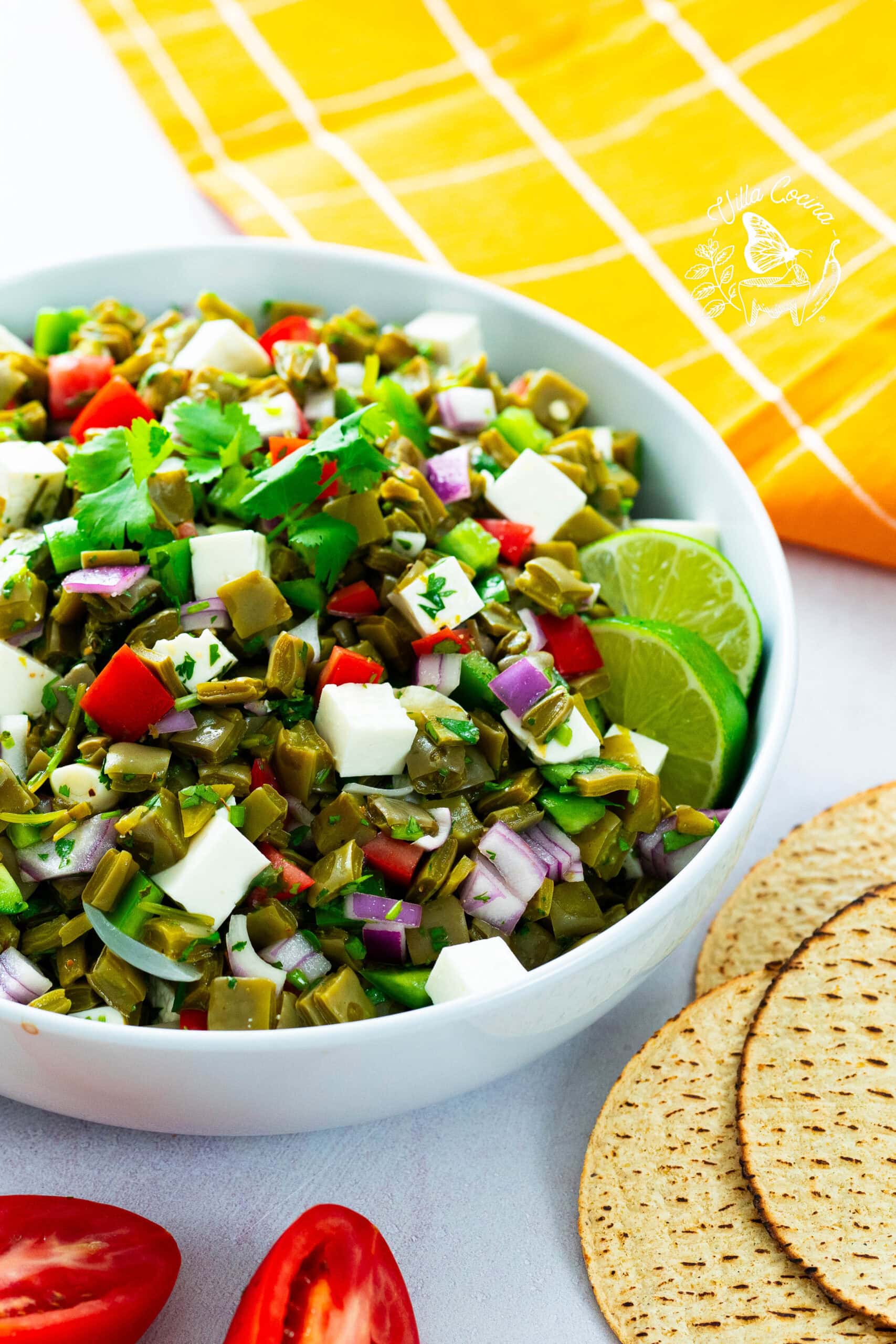
Fresh, vibrant, and full of flavor, this classic Ensalada de Nopales comes together in just 35 minutes.
Nopales is the Mexican superfood we should all be enjoying more of. And I know, cactus? It may sound unexpected, but this humble ingredient has been at the heart of Mexican cooking for generations.
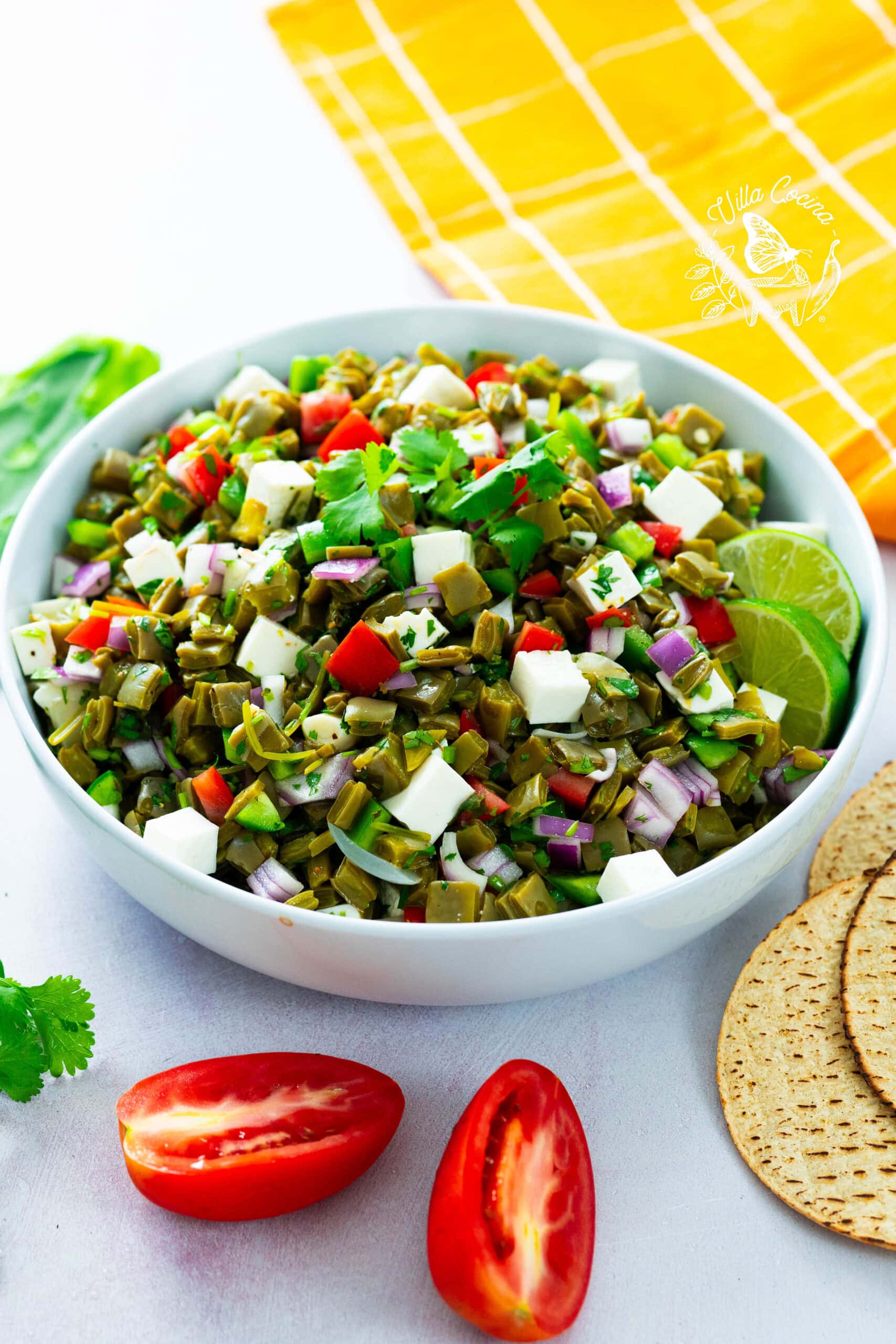
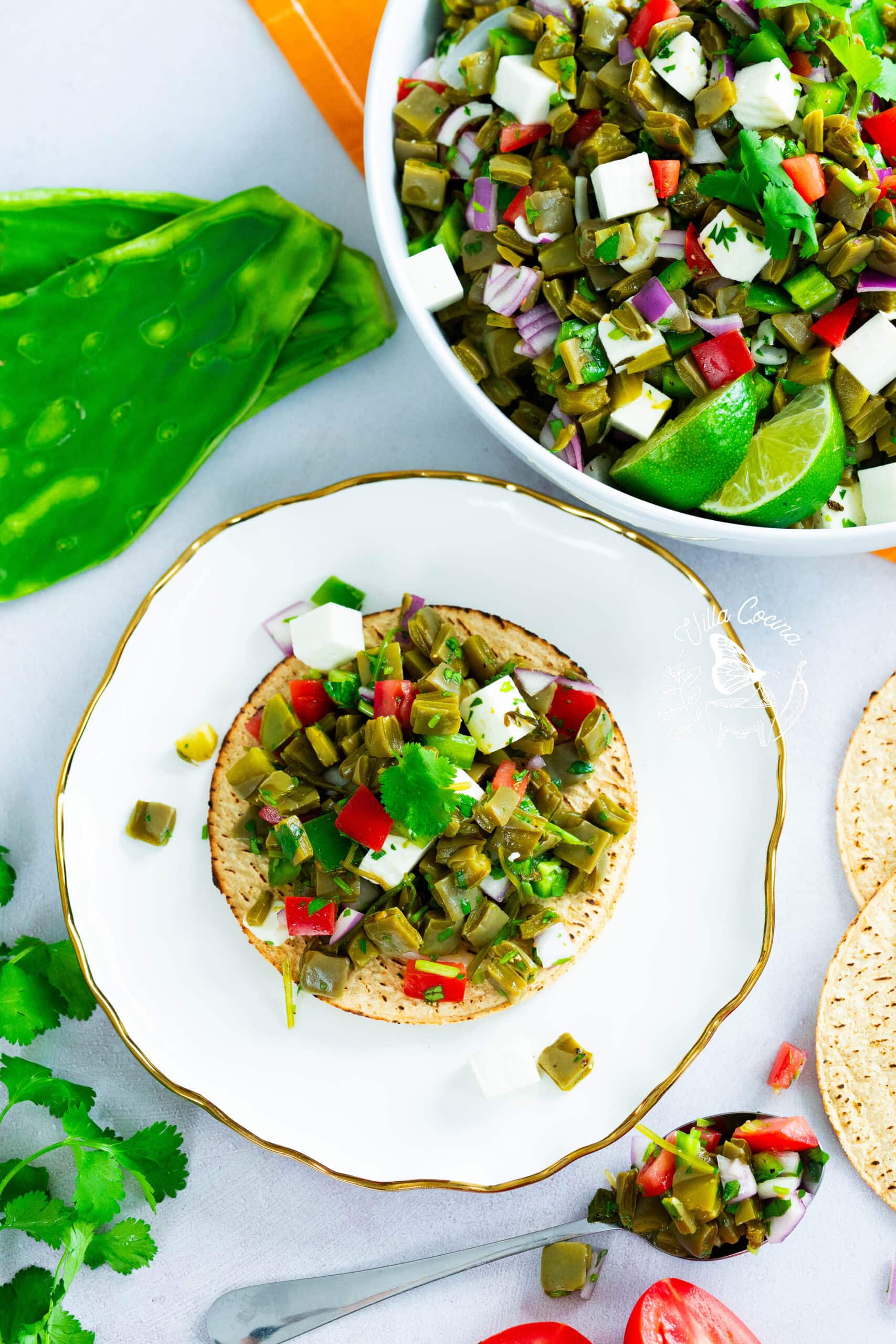
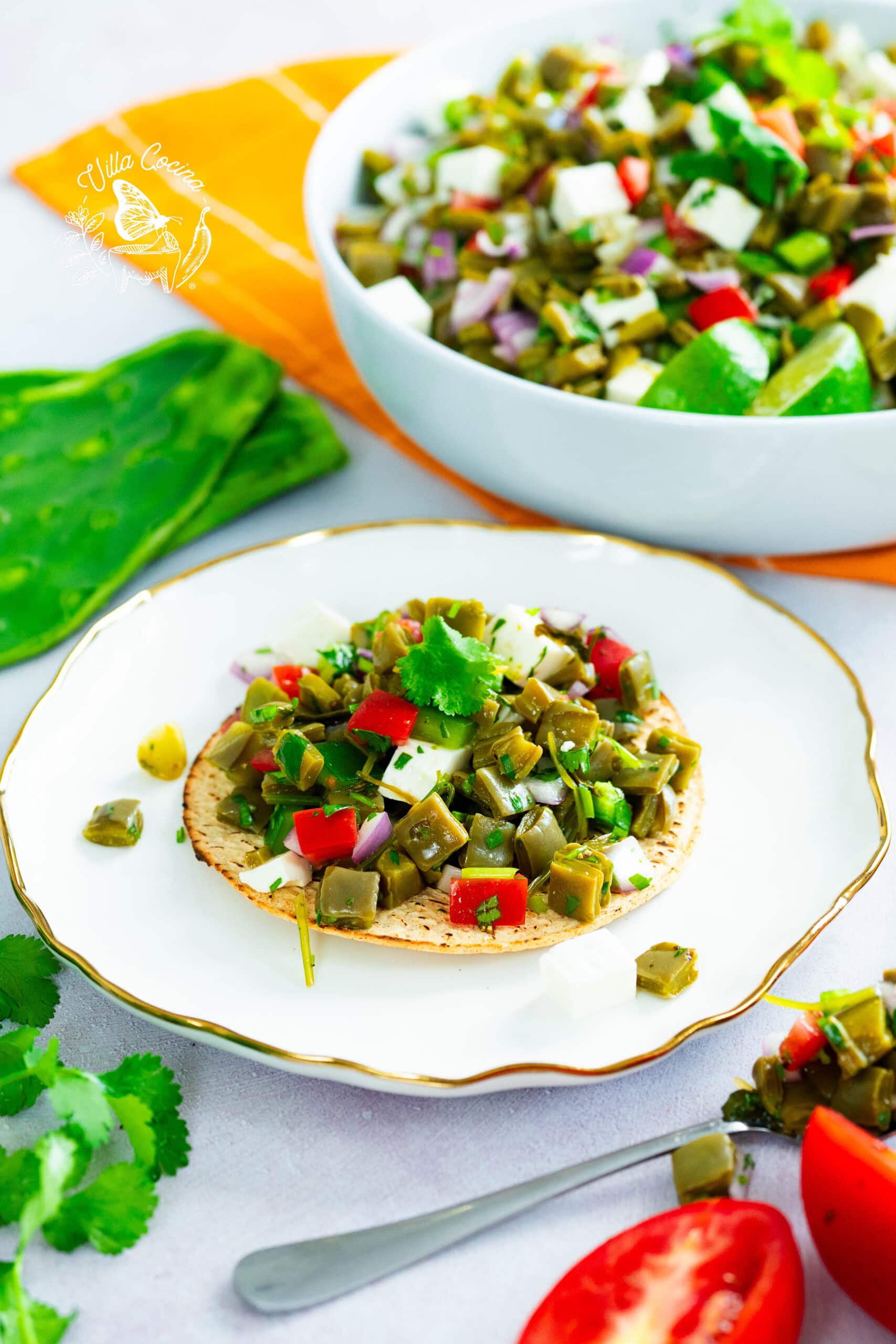
What makes this salad special is its simplicity. Tender nopales are tossed with fresh onion, tomato, cilantro, and jalapeños, then coated in a homemade vinaigrette. Cubed queso panela is folded in at the end for a light, creamy bite.
Nopales are enjoyed in a wide range of dishes, from fresh salads like this one or with eggs for breakfast, to tacos, soups, and stews, making them a staple in Mexican cuisine.
What Are Nopales?
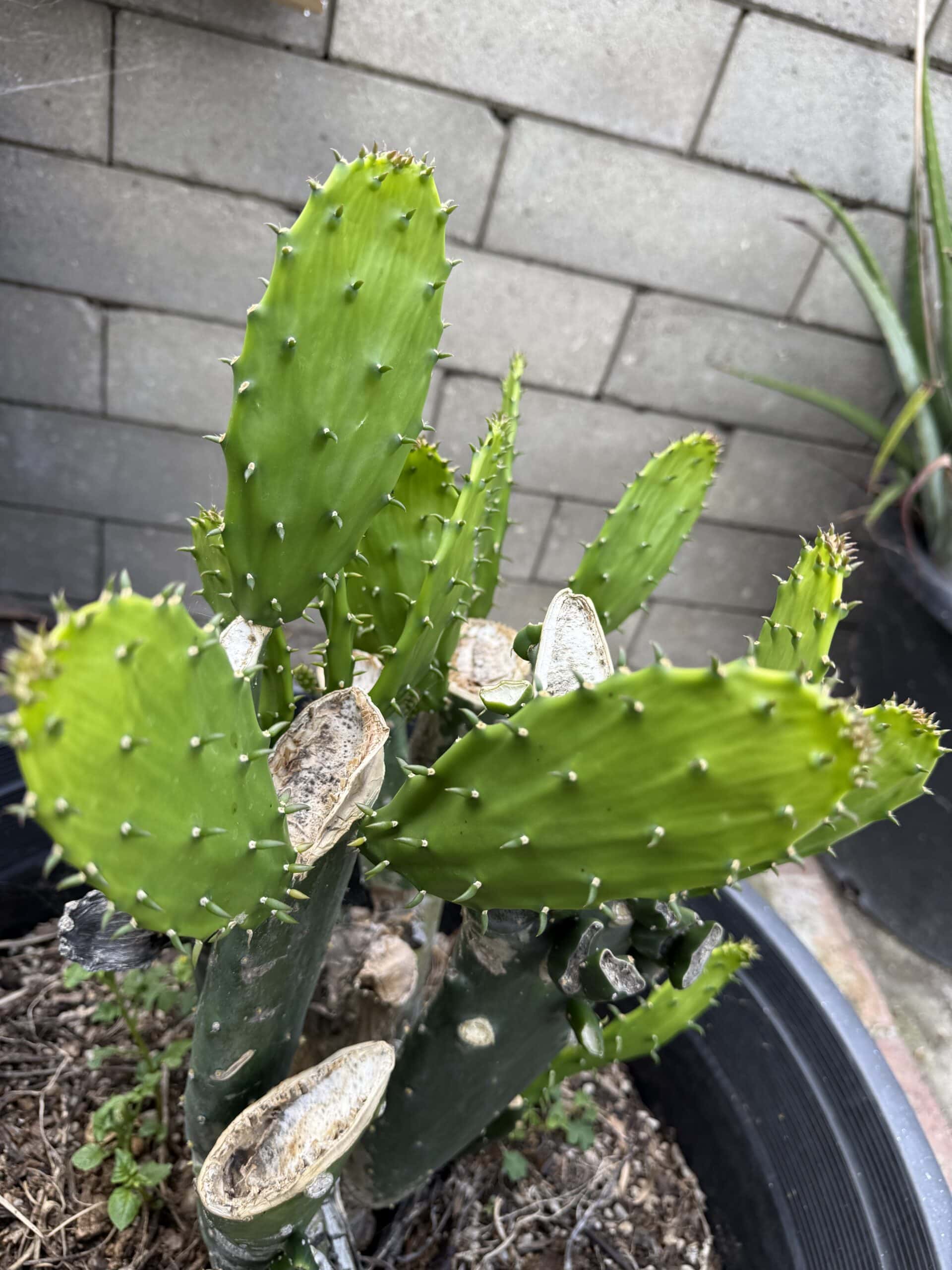
Nopales are the edible paddles of the prickly pear cactus, native to Mexico and enjoyed since ancient times. They grow in flat, spine-covered paddles and contain a natural viscosity, similar to okra, which helps retain moisture in hot climates.
Mild and versatile, they pair well with many dishes and have a tender texture with a slightly tangy, fresh flavor.
As My Father Taught Me: Picking Nopales
My father has cultivated nopales his entire life, and one thing he always says is that the best nopales for eating are the younger ones, about half the size of a mature paddle. At that stage, they’re more tender, with a fresher, more concentrated flavor, and a vibrant green color.

When harvesting, he prefers to do it in the morning. According to him, that’s when nopales are at their best, more tender, slightly more acidic, and full of life. By the afternoon, they mellow out, but as long as you choose young, tender paddles, you’ll still get great results.
Ingredients
- Nopales: Mild, slightly tangy with a tender texture; the base of the salad.
- Cilantro, Tomato, Jalapeños: Creates a fresh, pico de gallo–style mix that adds brightness, color, and texture.
- White Onion, Garlic, Red Onion: Build savory depth while adding sharpness, crunch, and a pop of color.
- Queso Panela: Mild, creamy Mexican cheese that does not melt, adding a soft bite.
- Vinaigrette (olive oil, vinegar, lime, honey, oregano, black pepper): Bright and tangy with a touch of sweetness; ties everything together with balanced acidity.
- Salt: Enhances and balances overall flavor.
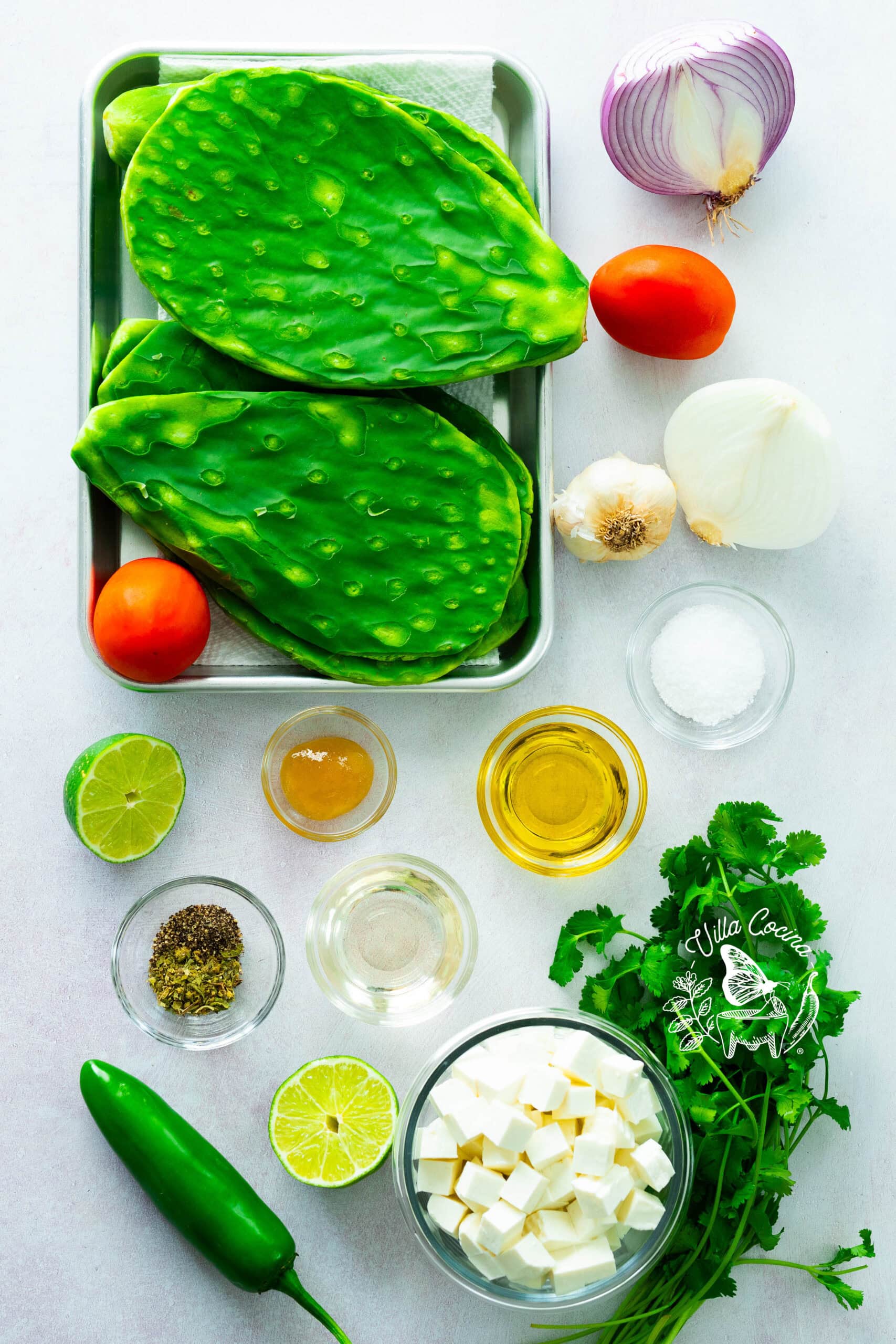
Buying Nopales: What to Look For
Look for nopales that are firm, bright green, and fresh. Avoid paddles that are overly soft or show signs of oxidation or discoloration. Below are three ways to buy them and which one I prefer.
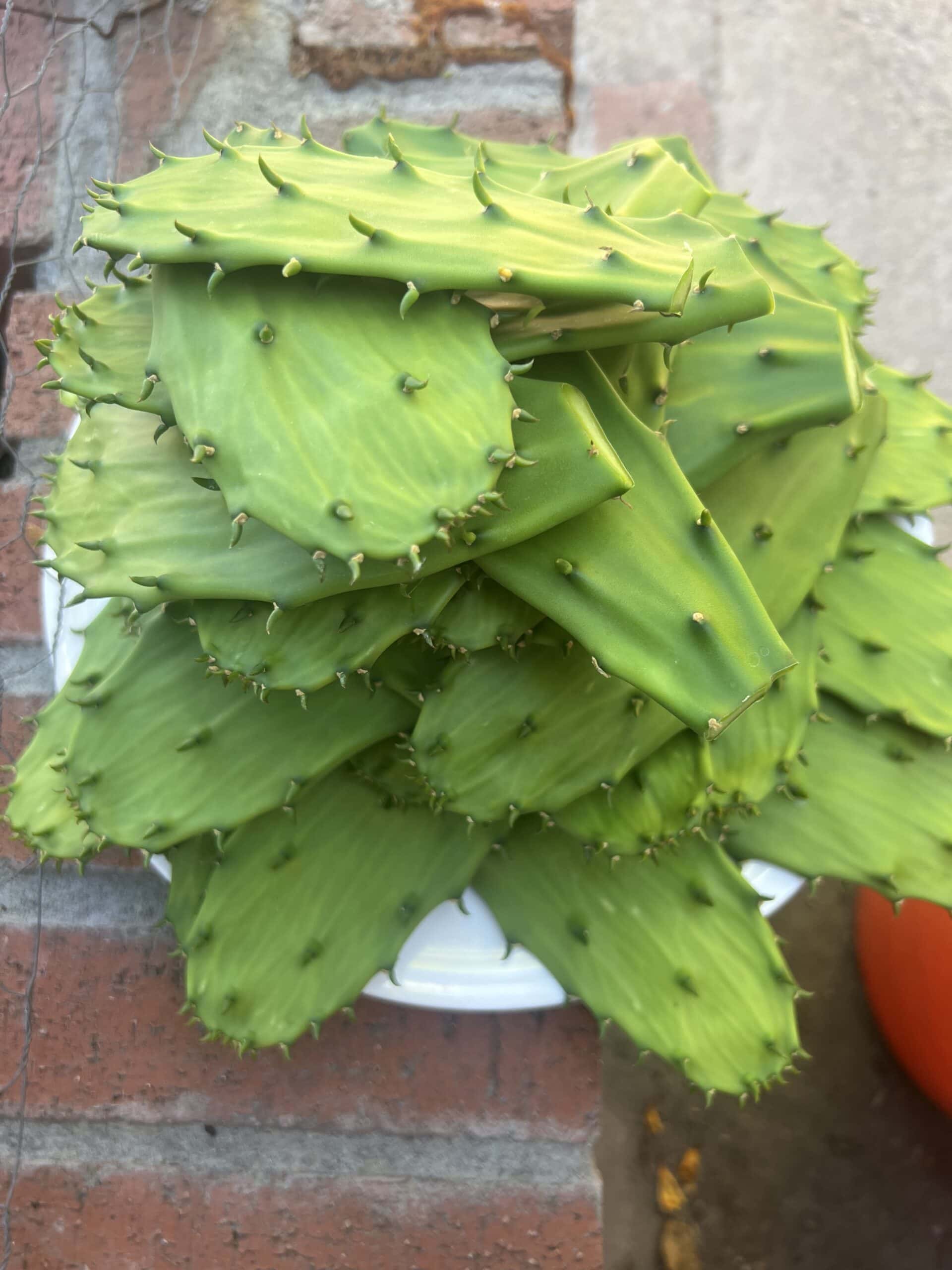
- Whole paddles with spines: These require prep at home. Remove the spines with a knife before dicing. See below for instructions.
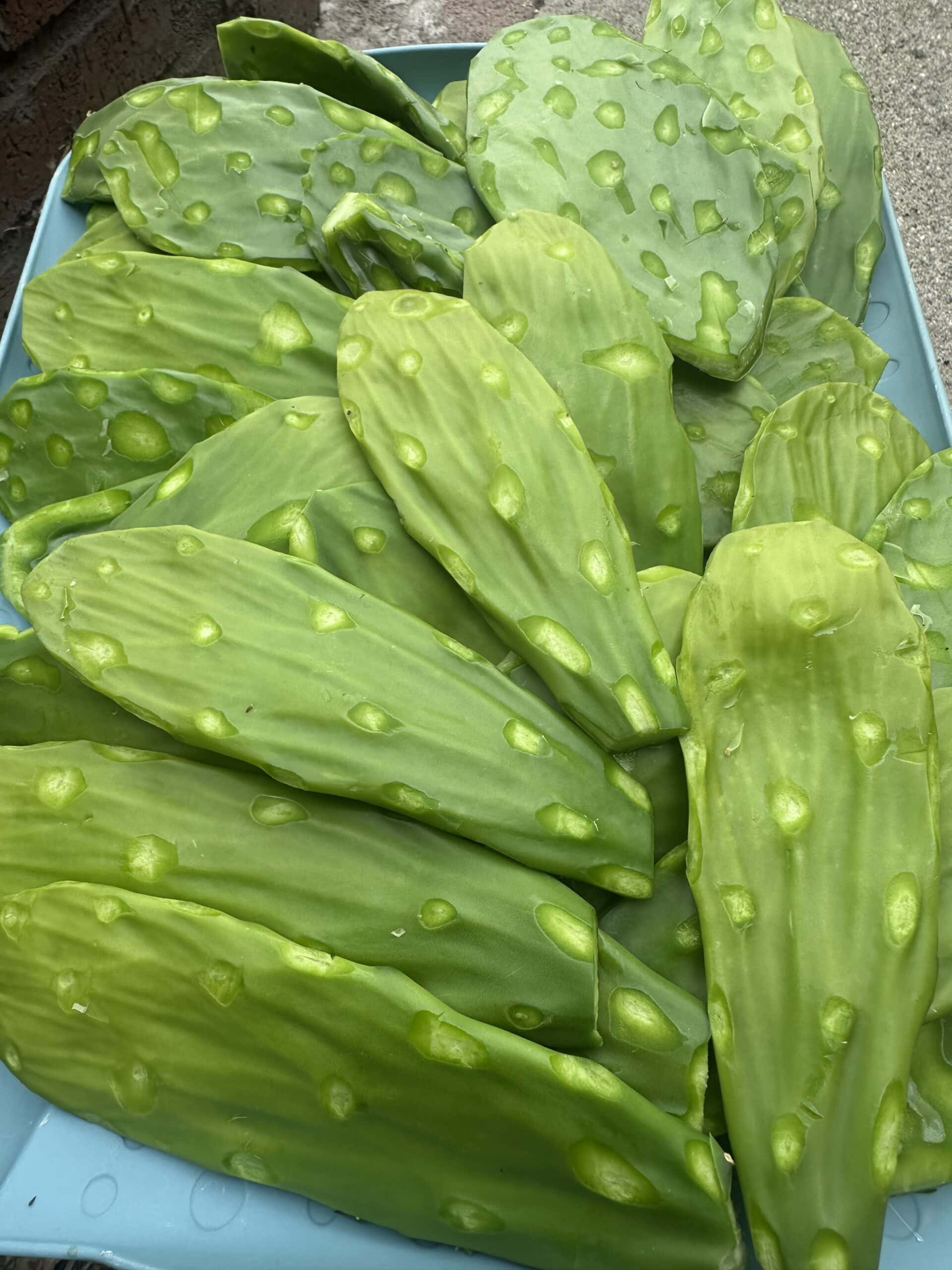
- Spineless paddles (preferred): The spines have already been removed and the paddles are typically sold bagged.
- Spineless paddles, diced: Require less prep, but tend to oxidize faster and can become soft if not purchased the same day. Look for a bright green color as a sign of freshness.
Always rinse spineless nopales thoroughly and check for any remaining spines before cooking, even if they are store-bought and appear clean.
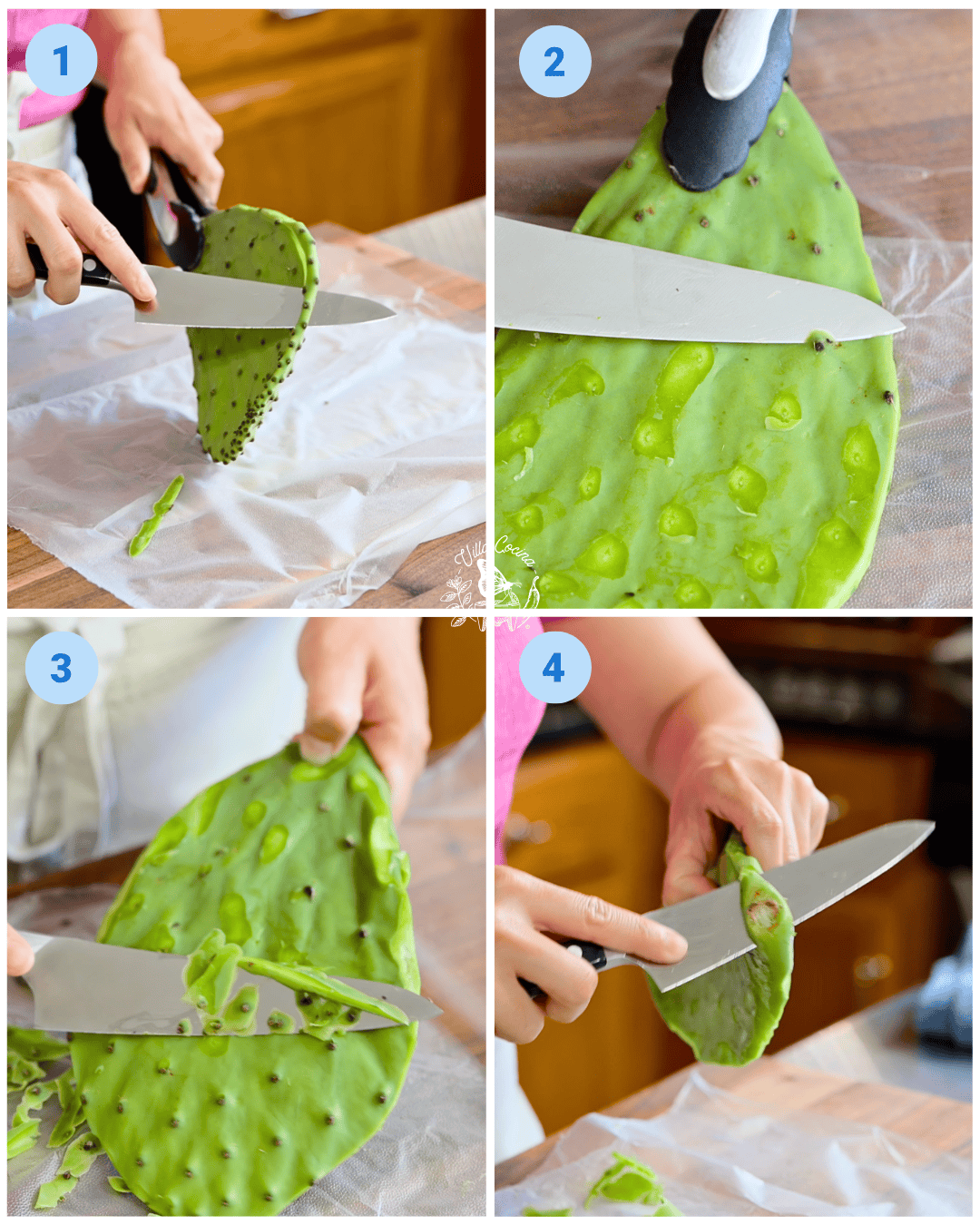
How to Clean Nopales with Spines
Hold the paddle with tongs and work carefully to avoid the spines. Wearing gloves is recommended, especially if it’s your first time.
Using a small, sharp knife, start along the edges and gently slide it to remove the spines. Lay the paddle flat and shave off each raised bump where the spines grow, working one at a time across the entire paddle. Trim off the base (root end).
Once all the spines have been removed, rinse thoroughly under cold water to remove any remaining spines or debris
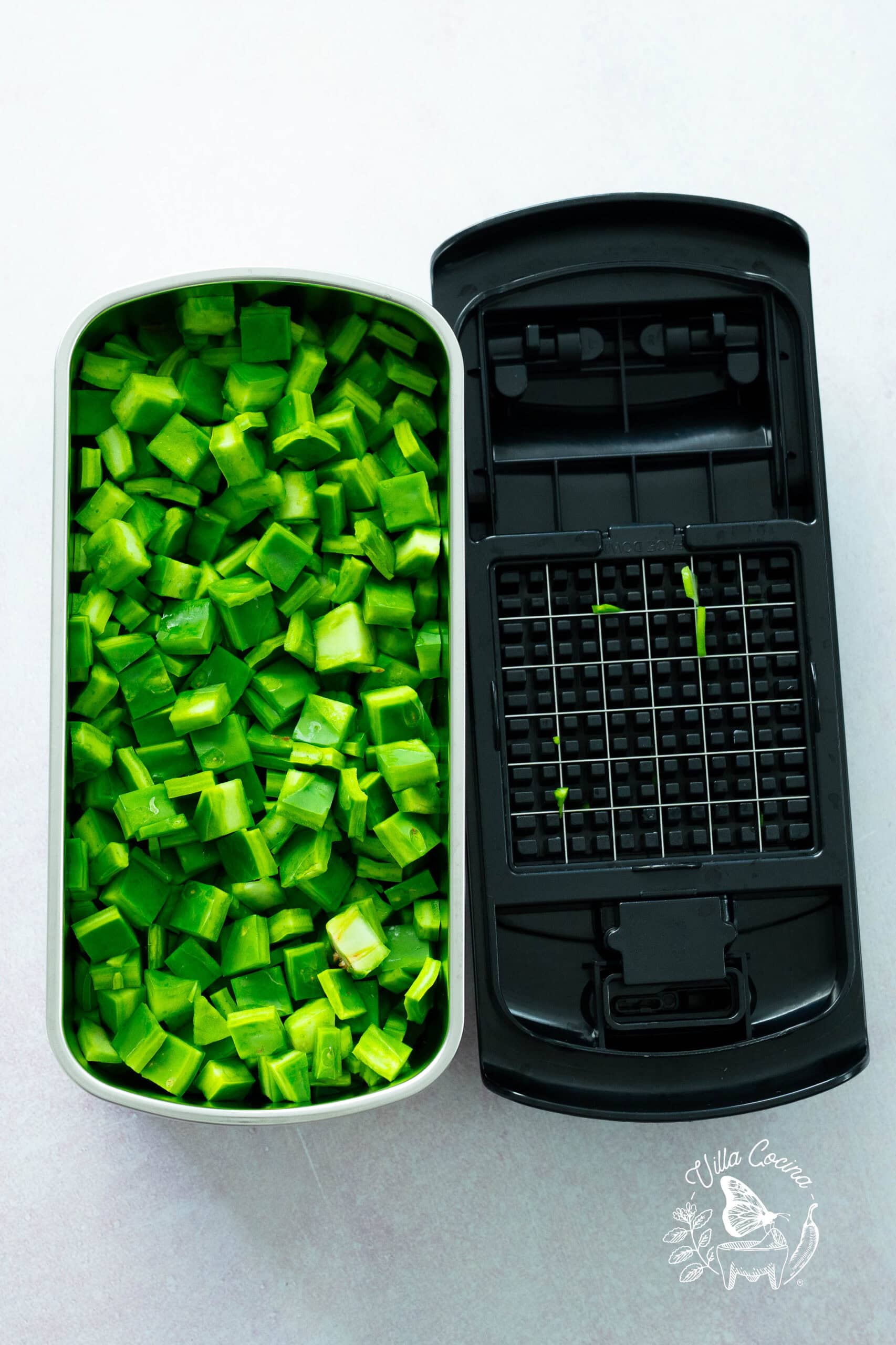
Tool That Comes in Handy
Food chopper: Makes dicing nopales quick and easy. Simply cut them into pieces that fit the chopper.
How to Make Ensalada de Nopales
Place the diced nopales in a large, deep pot. Add the white onion, garlic, water, ¼ bunch roughly chopped cilantro, and 1 tsp kosher salt. Stir to combine.
Set over medium heat and bring to a gentle simmer. Cover and cook for 15–20 minutes, stirring occasionally.
Adjust the heat as needed to maintain a gentle simmer. The nopales are ready when they turn from a bright green to a pale green color and are tender.
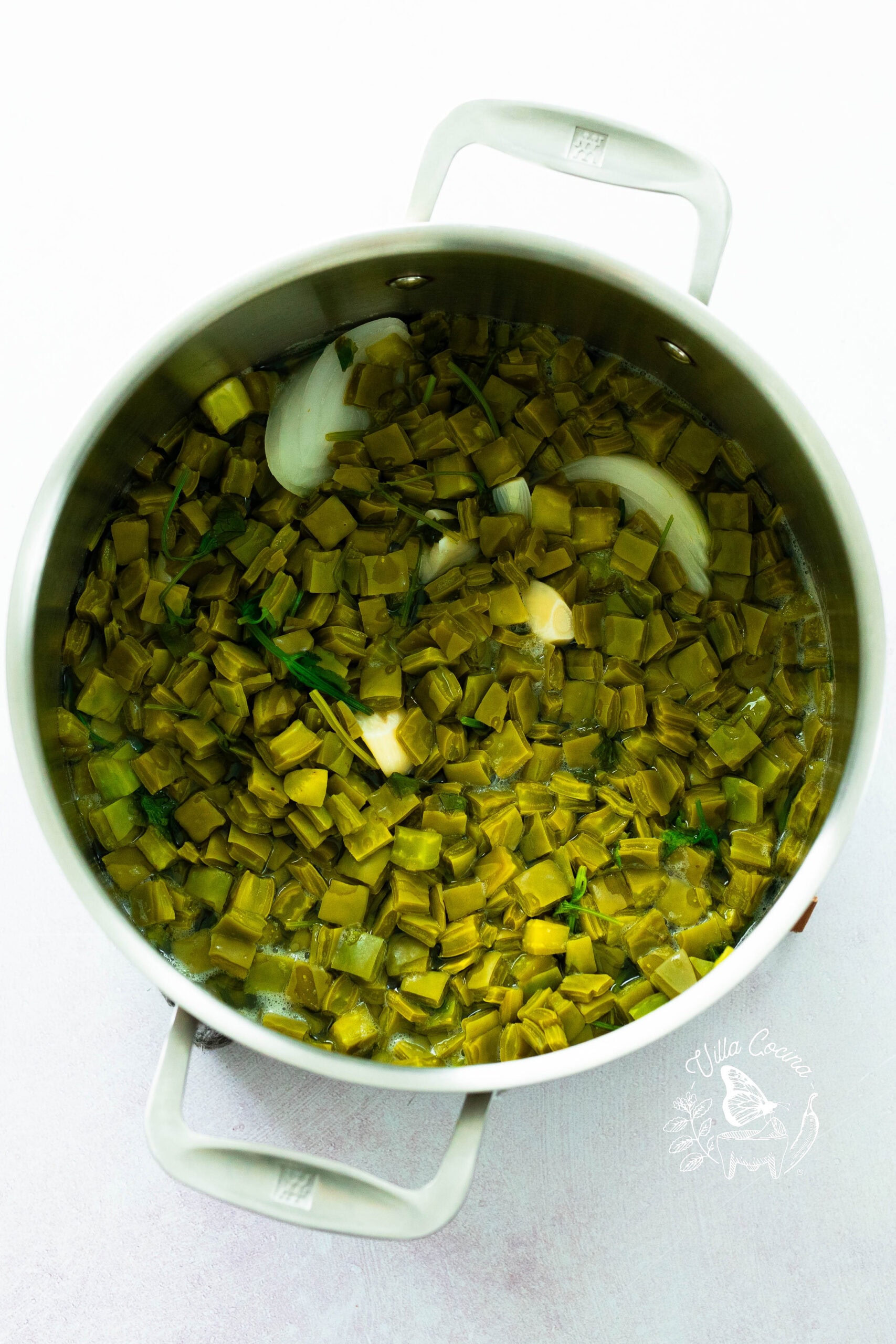
Drain the nopales, then rinse under cold water to cool and remove excess viscosity. Let them drain well. Discard the onion.
Transfer the cooled nopales to a large nonreactive bowl. Add the tomatoes, red onion, jalapeños, ¼ bunch finely chopped cilantro, and queso panela. Toss gently to combine.
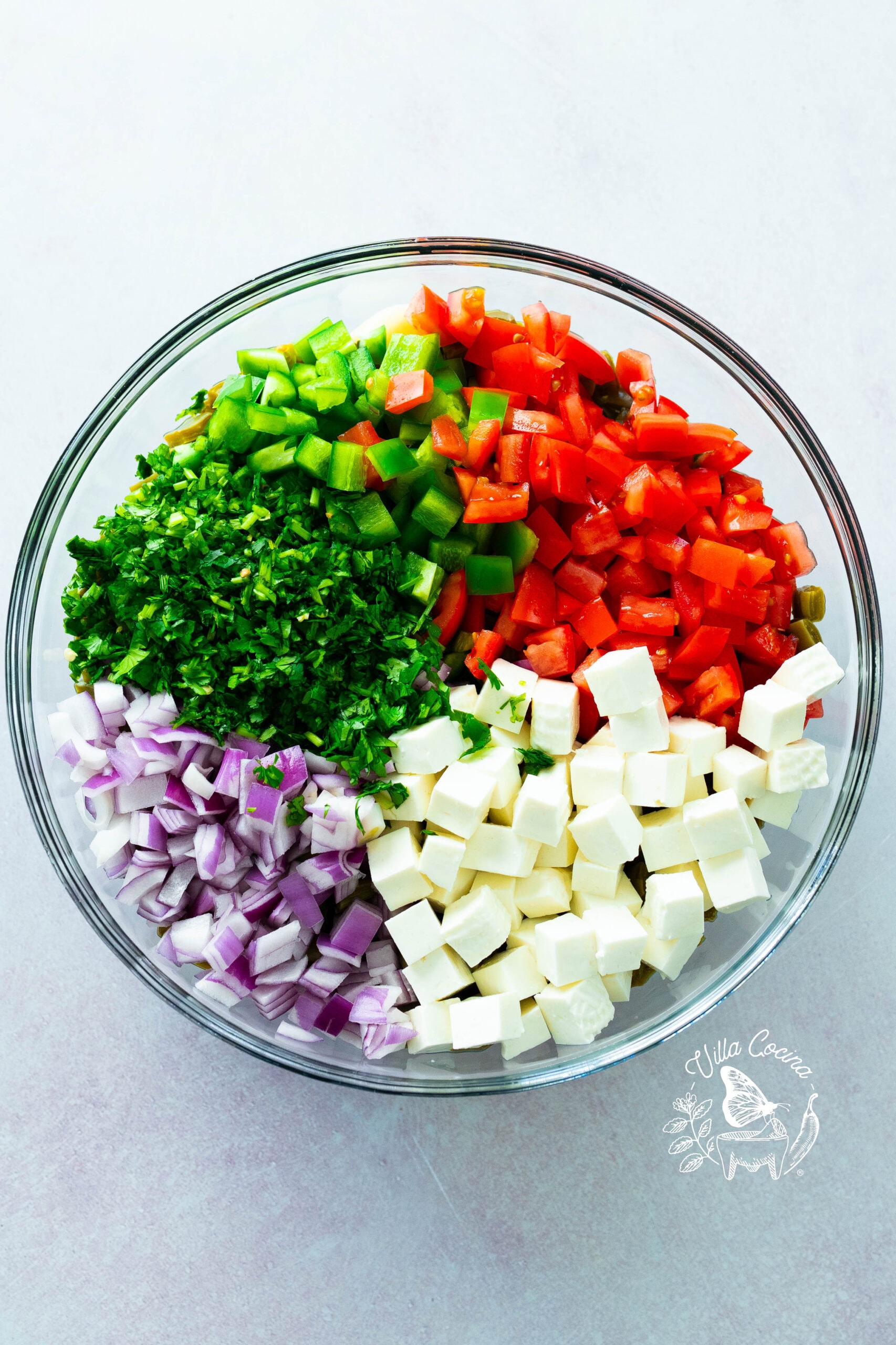
In a separate nonreactive bowl, whisk together all the vinaigrette ingredients with the remaining ½ tsp kosher salt until well combined.
Pour over the salad and toss to coat. Taste and adjust salt as needed. Serve as a fresh side dish, with tacos or chips.
Recipe Video Tutorial
Watch my easy video tutorial for step-by-step visuals on making Ensalada de Nopales.
Enjoyed the video? Subscribe and tap the bell for updates on new recipes. Thank you for your support!
Where to Find Nopales
These days, nopales are easy to find in restaurants, Mexican markets, and farmers markets. My dad even grows them at home in California, which shows just how accessible and loved they’ve become.
Why the Natural Viscosity?
That natural “slimy” texture comes from soluble fiber, also known as mucilage. When nopales are cut and cooked, this fiber is released, creating a light gel-like consistency.
This is actually beneficial. In Mexico, cactus is often seen as a medicinal food and is part of an everyday diet, reflecting cultural and traditional practices, not medical advice.
What some research has allegedly shown is that nopales are rich in fiber, antioxidants, and plant compounds. They have been studied in relation to digestion and blood sugar, with some findings suggesting a potential role in supporting blood sugar levels, though more research is needed to fully understand these effects
Store
- Refrigerate (fresh salad): Remove the cheese and store it separately. Keep both the salad and the cheese in airtight containers for up to 2–3 days.
- Refrigerate (cooked nopales only): Store drained nopales in an airtight container for up to 2–3 days before assembling the salad.
- Freeze (nopales only): Store cooked and fully drained nopales in a freezer-safe bag or container for up to 2–3 months. Thaw in the refrigerator, then assemble the salad.
- Avoid freezing the fully assembled salad, as the vegetables and cheese can lose their texture.
More Salad Recipes
What to Serve with This Salad
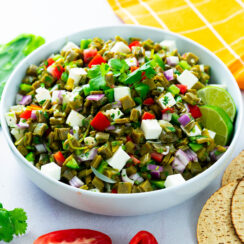
Ensalada de Nopales
Ingredients
Shared Ingredients
- 1½ tsp kosher salt, divided (plus more to taste)
- ½ bunch cilantro, divided (¼ for cooking, roughly chopped; ¼ for salad, finely chopped)
Cook Nopales
- 3 lbs nopales (cactus paddles), spineless, cleaned, medium diced
- ¼ white onion, wedges
- 5 garlic cloves, peeled
- ½ cup water
Veggies & Queso
- 3 Roma tomatoes, seeded, medium diced
- ½ red onion, medium diced
- 2 jalapeños, seeded, medium diced
- 10 oz queso panela, medium cubed
Vinaigrette
- 3 tbsp olive oil
- 3 tbsp white wine vinegar
- 1 lime zest
- 3 tbsp lime juice, fresh
- 1 tsp honey
- 1 tsp dried Mexican oregano
- To taste black pepper, ground
Instructions
- Place the diced nopales in a large, deep pot. Add the white onion, garlic, water, ¼ bunch roughly chopped cilantro, and 1 tsp kosher salt. Stir to combine.
- Set over medium heat and bring to a gentle simmer. Cover and cook for 15–20 minutes, stirring occasionally.
- Adjust the heat as needed to maintain a gentle simmer. The nopales are ready when they turn from a bright green to a pale green color and are tender.
- Transfer the cooled nopales to a large nonreactive bowl. Add the tomatoes, red onion, jalapeños, ¼ bunch finely chopped cilantro, and queso panela. Toss gently to combine.
- In a separate nonreactive bowl, whisk together all the vinaigrette ingredients with the remaining ½ tsp kosher salt until well combined.
- Pour over the salad and toss to coat. Taste and adjust salt as needed. Serve as a fresh side dish, with tacos or chips.
Notes
Nutrition
Did you make this recipe?
Show some love! Tag @villacocinaofficial on Instagram and drop a 5-star review. Your support means everything—thanks!