Green Chicken Pozole (Verde)
Pozole verde is pure comfort with a festive soul. A beloved Mexican soup made with vibrant green broth, tender chicken, and plump hominy, it’s rooted in tradition and meant to be shared.
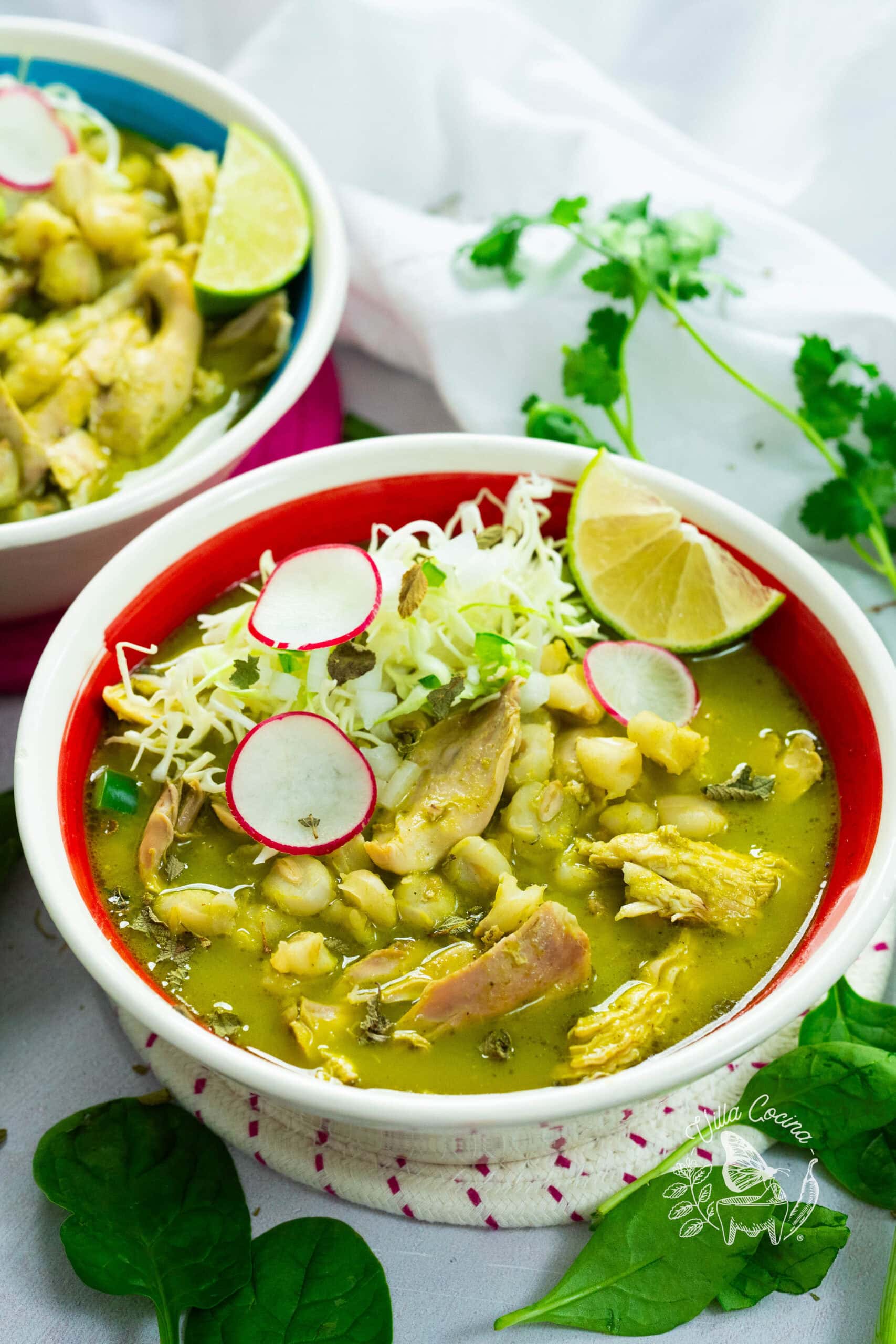
In Mexican cooking, color and flavor go hand in hand, and pozole verde honors both. Its vibrant green broth comes from a balanced salsa verde made with tomatillos, greens, herbs, and spices, simmered with hominy and tender shredded chicken for a deeply comforting bowl.
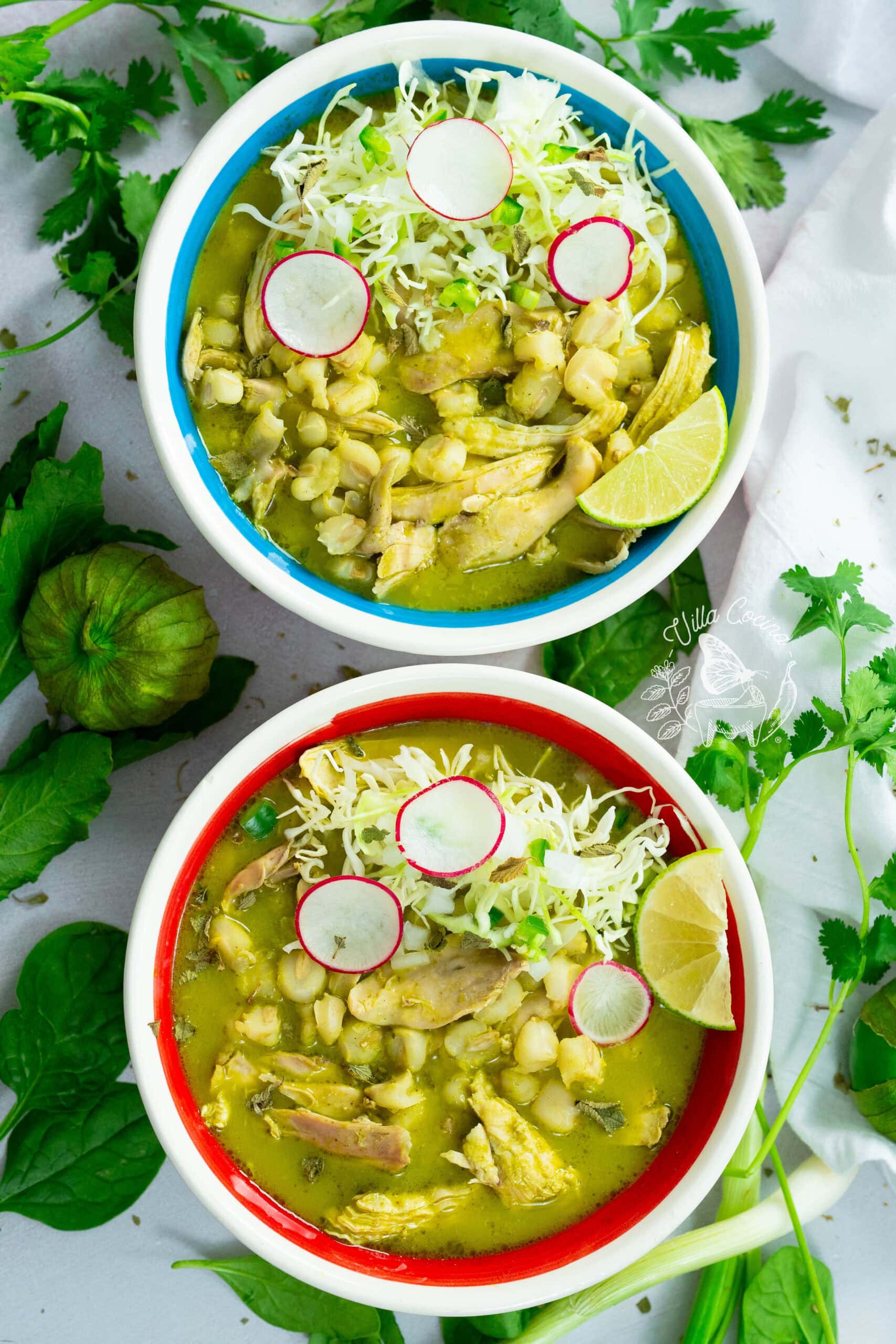
Finished with fresh toppings like oregano, onion, cabbage, radishes, avocado, and lime—and served with tostadas—this dish is vibrant, nourishing, and meant to be shared.
What Is Pozole?
Pozole is a traditional Mexican soup or stew made with hominy, slow-simmered broth, and meat—most often pork or chicken. More than just a dish, pozole is a symbol of togetherness.
It’s commonly served during celebrations, holidays, and family gatherings, where everyone builds their own bowl with fresh toppings. Every spoonful feels comforting, familiar, and deeply connected to home.
The Origins of Pozole
Pozole dates back to pre-Hispanic Mexico, where it held ceremonial importance. Over time, as cooking techniques and ingredients evolved, pozole became the beloved family dish we know today.
While the preparation has changed across generations, the heart of pozole remains the same: nourishment, tradition, and shared moments around the table.
Types of Pozole by Region
While the foundation stays consistent, pozole varies beautifully by region, each reflecting local tastes and ingredients.
- Pozole Blanco (Guadalajara)
Simple and pure, this version features a clear broth with hominy and meat. It’s typically served with salsa macha for a bold kick of heat and added depth of flavor. - Pozole Rojo (Central & Northern Mexico)
Made with dried red chiles, this version is bold, earthy, and deeply comforting. - Pozole Verde (Guerrero & Surrounding Regions)
Known for its vibrant green color, pozole verde is made with tomatillos, herbs, greens, and peppers. It’s fresh, slightly tangy, and incredibly aromatic—my personal favorite for its balance and brightness.
Today, the regions associated with each style of pozole serve more as a reference. With greater access to shared recipes, local cooks are exploring pozole styles beyond their own regions—while still honoring abuela’s traditions in every bowl.
Ingredients
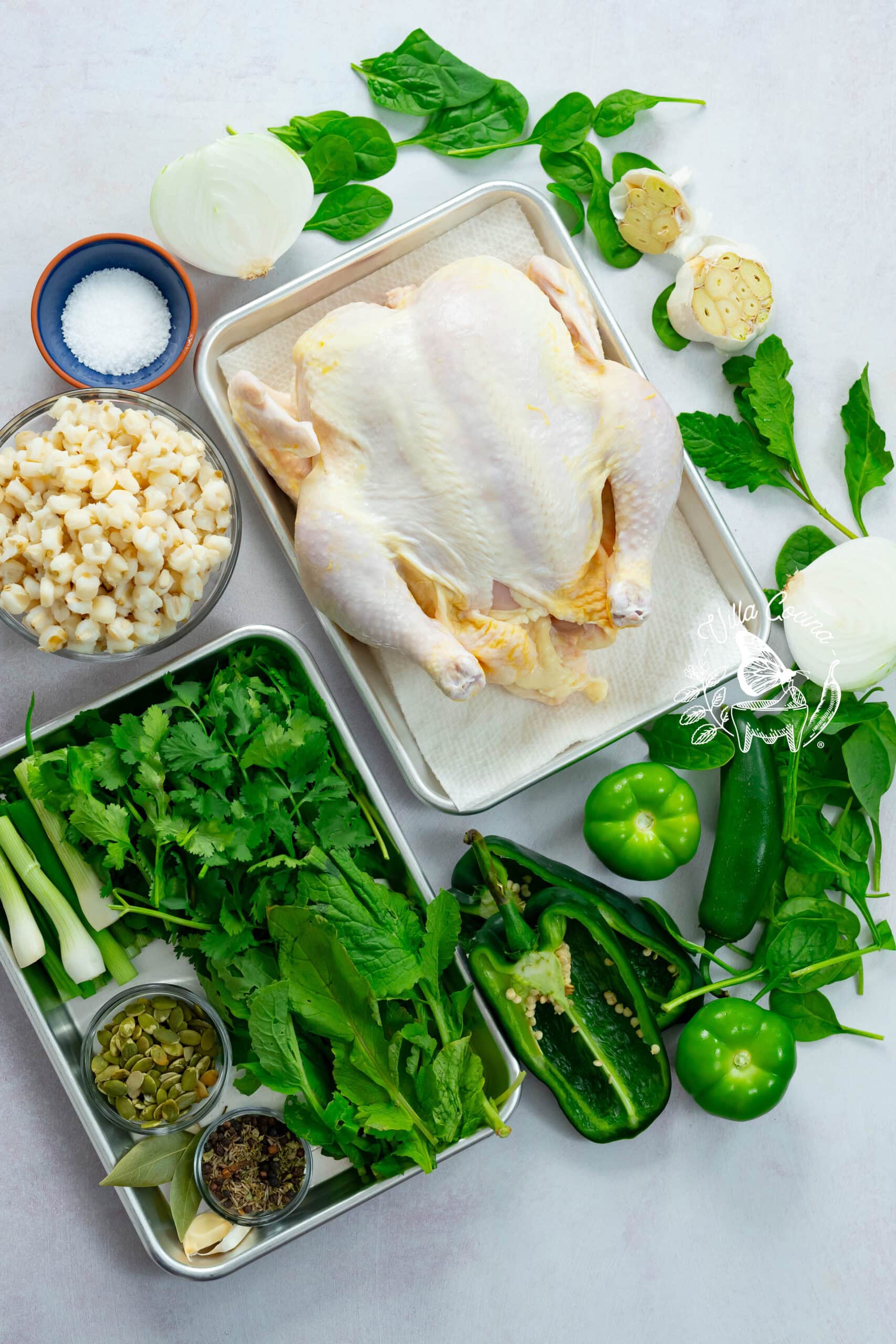
- Whole chicken – Creates a rich, flavorful broth and provides tender meat.
- Garlic – Adds depth and savory aroma.
- White onion – Builds sweetness and balance.
- Bay leaves – Gently infuse warmth and complexity.
- Tomatillos – Bright, tangy base of the green sauce.
- Poblano peppers & jalapeños – Mild heat with grassy, traditional flavor.
- Pumpkin seeds – Add body and subtle nuttiness.
- Green onions – Fresh, slightly sharp flavor.
- Spinach leaves, radish leaves & cilantro – Bring herbal freshness and color.
- Cloves, cumin seeds & black peppercorns – Add warmth and spice.
- Mexican oregano – Earthy and aromatic.
- Epazote leaves – Traditional herb that gives pozole its authentic flavor.
- Hominy – The heart of pozole. Tender hominy absorbs the broth, adding texture and making every bowl hearty and comforting.
How to Make Pozole Verde
Here’s a quick rundown of the main steps for making this tamale casserole. For full, step-by-step instructions, check out the recipe card.
Step 1: Roast the Vegetables
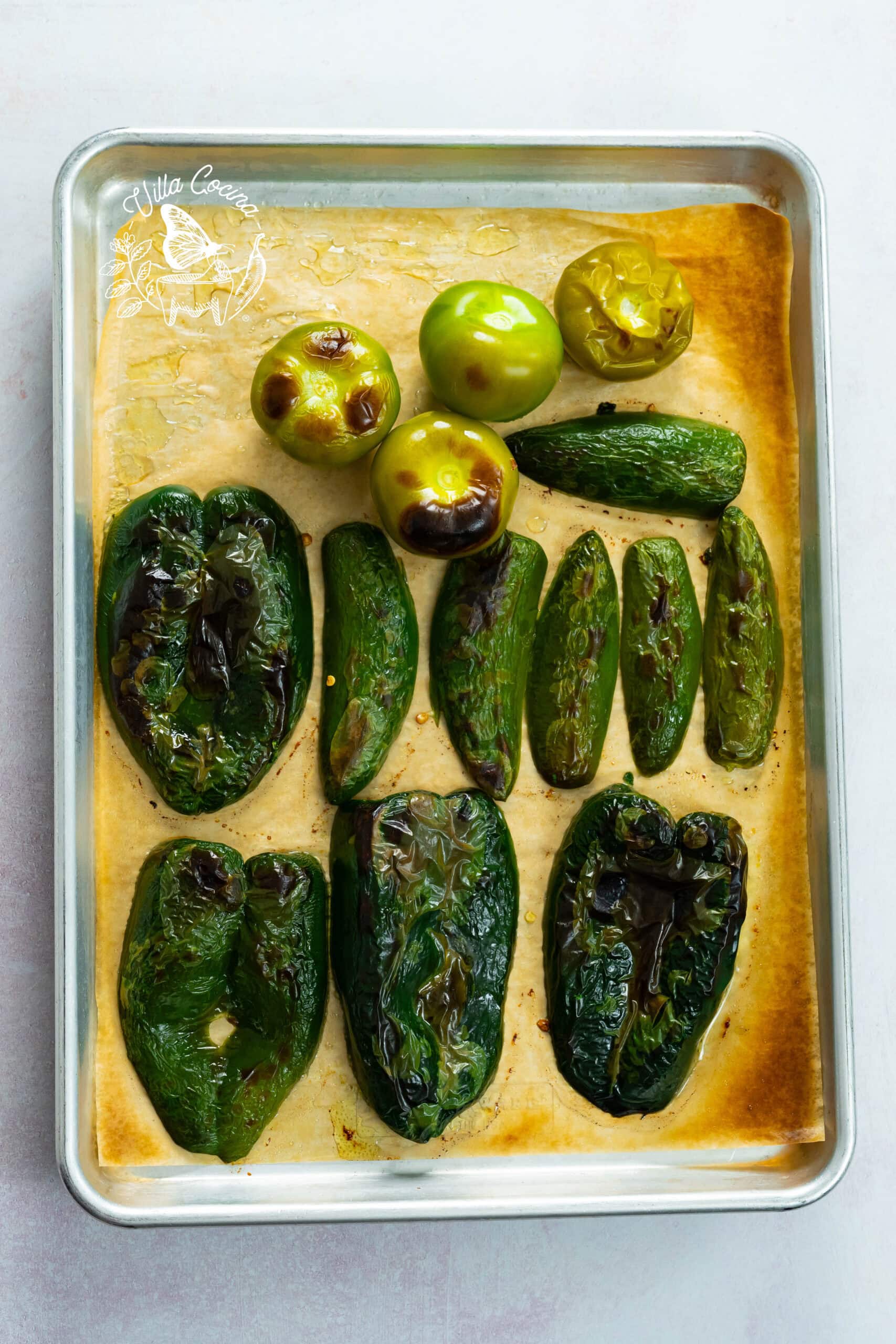
Broil the tomatillos and peppers until charred and softened. Peel the poblanos once cool and set everything aside for the salsa verde.
Step 2: Spatchcock and Cook the Chicken
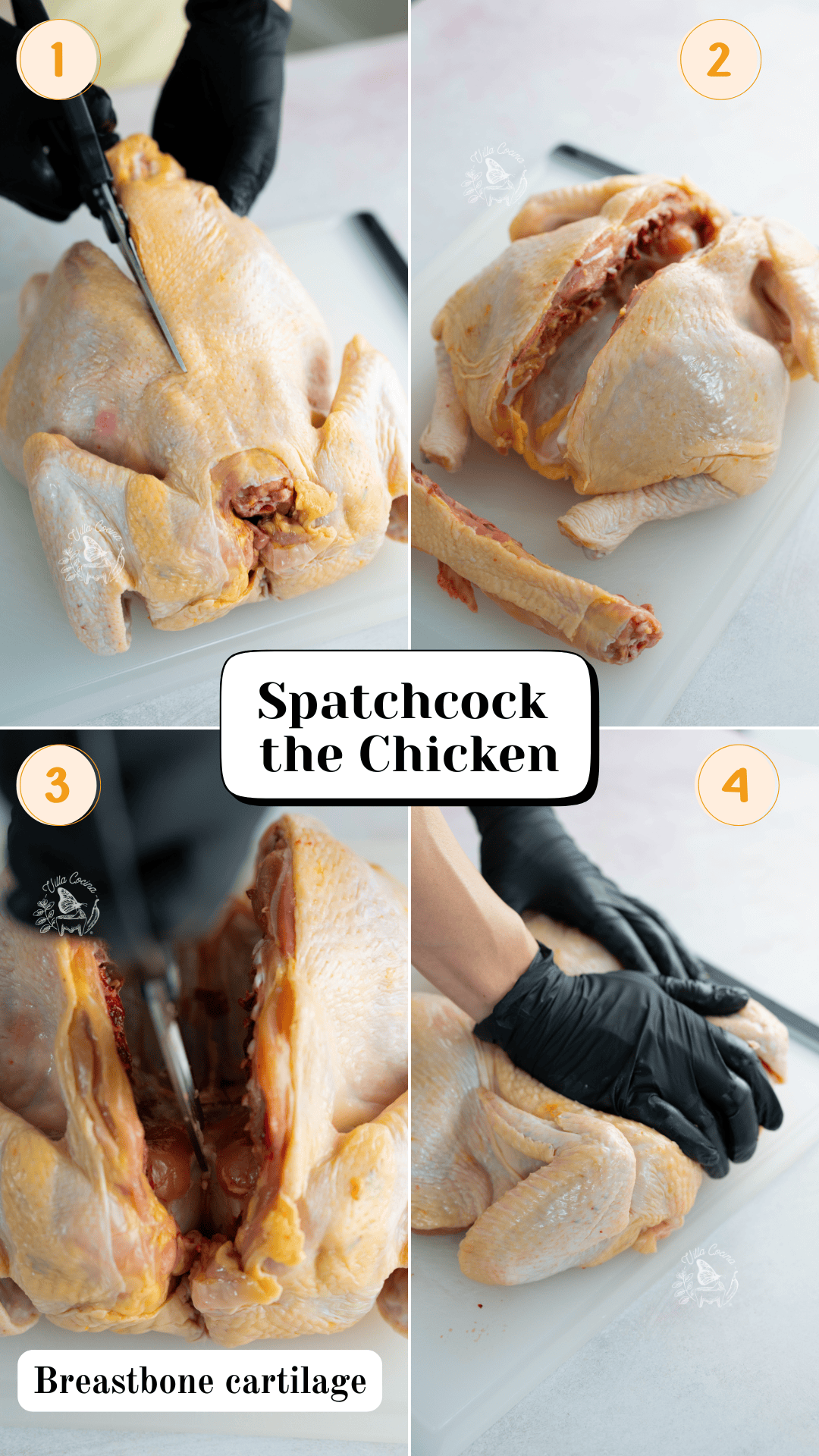
Remove the backbone, flatten the chicken, and season generously.
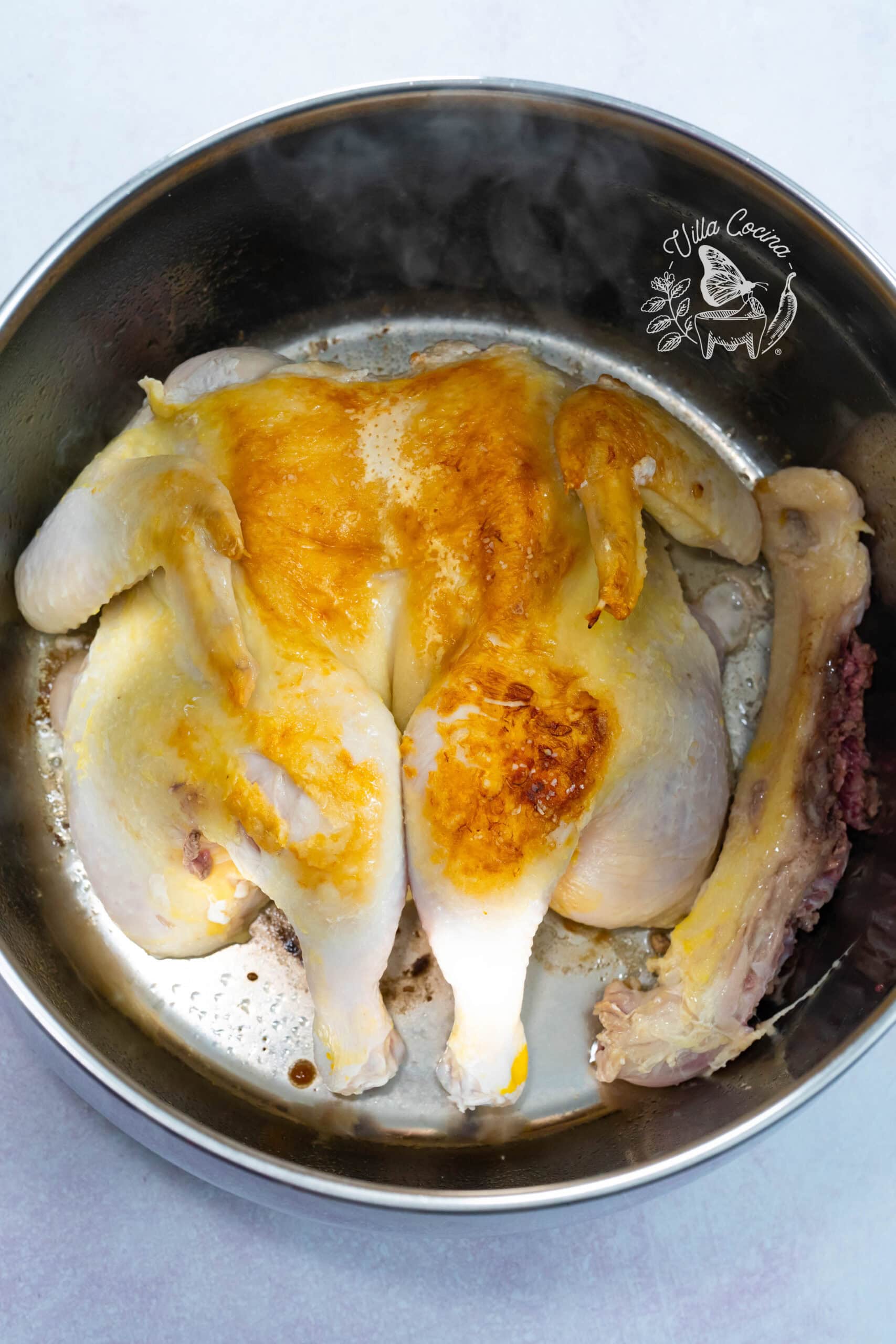
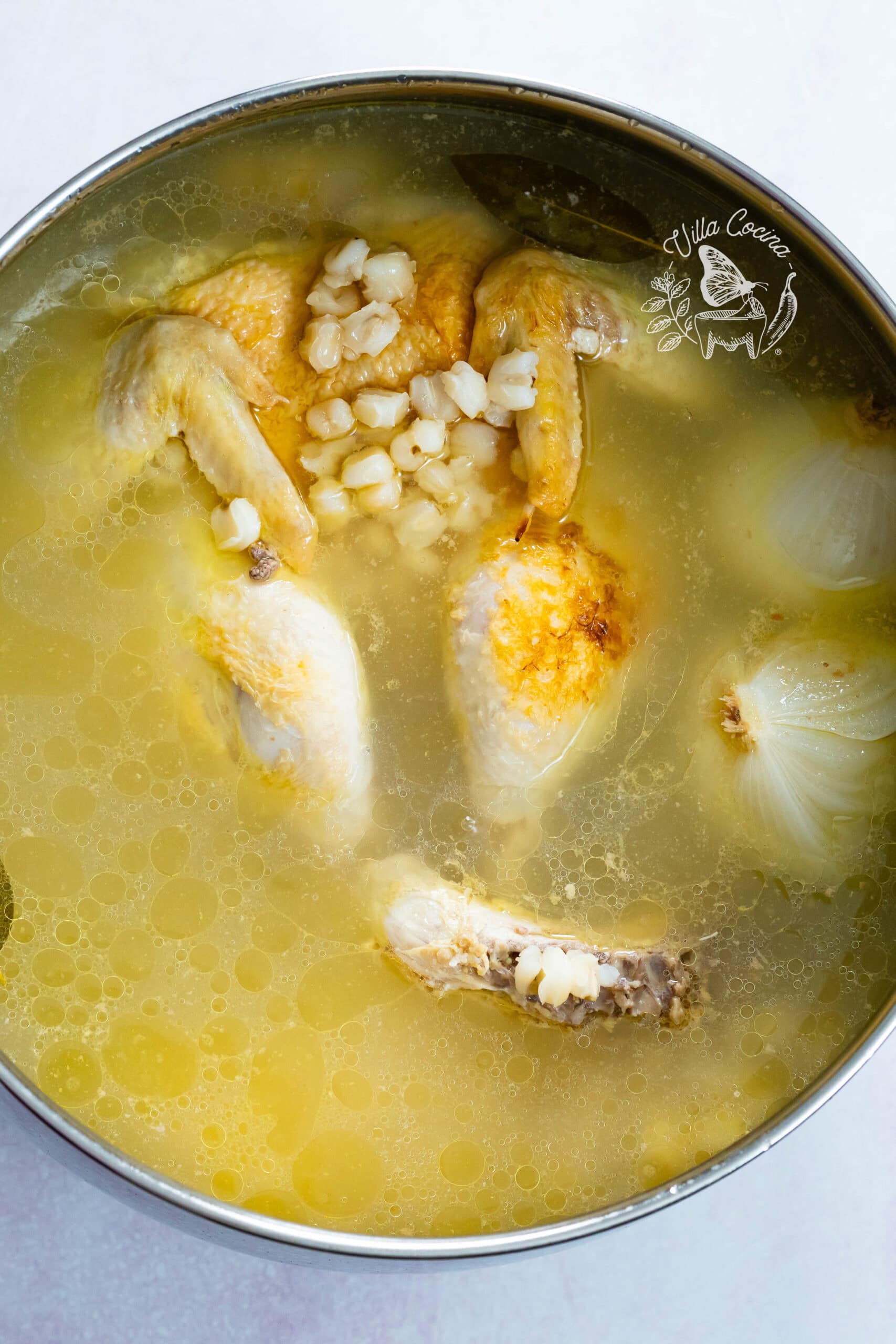
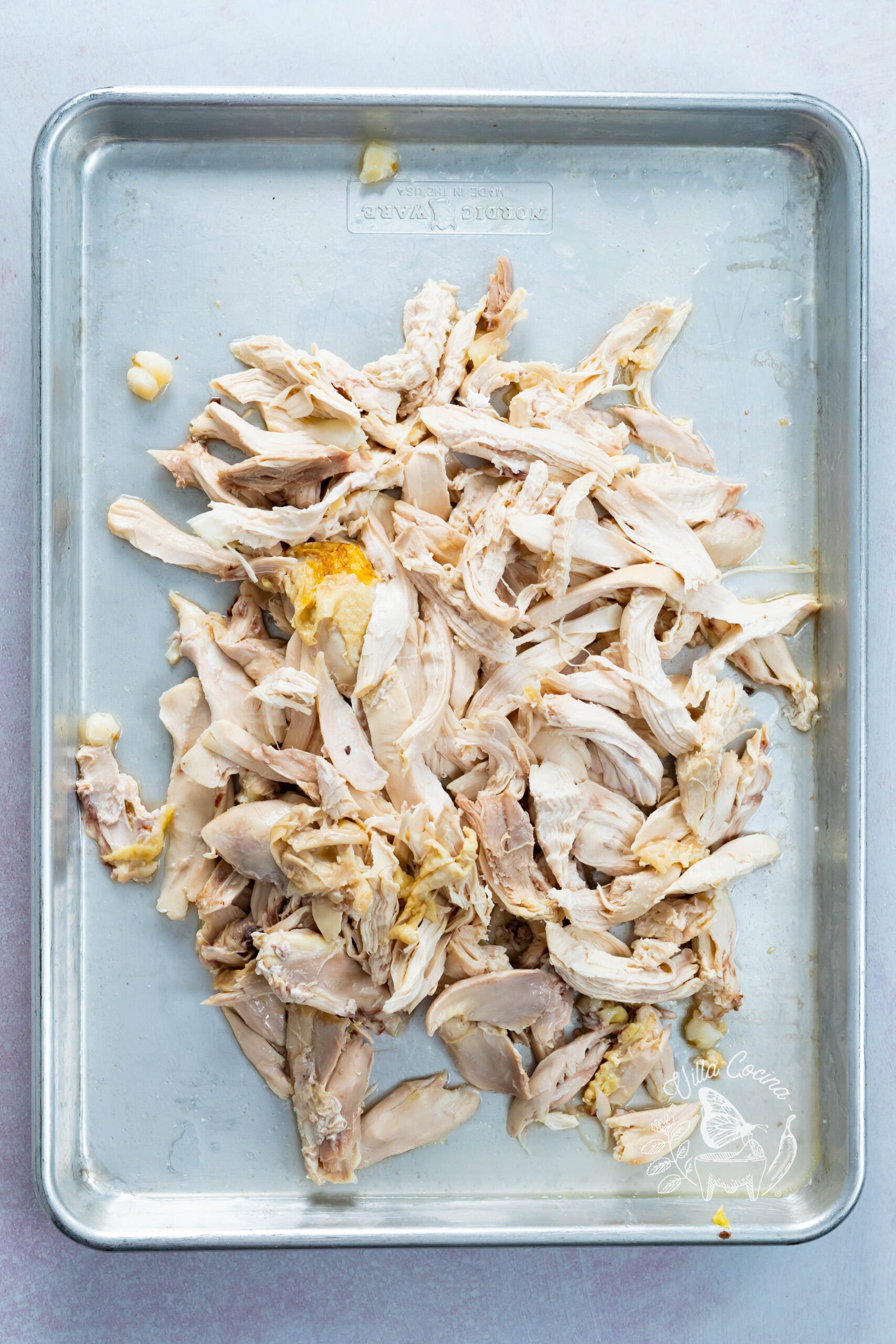
Sear the chicken until golden brown, then simmer it with garlic, onion, bay leaves, and hominy to create a rich, flavorful broth. Once cooked, shred the chicken and reserve.
Step 3: Make the Salsa Verde
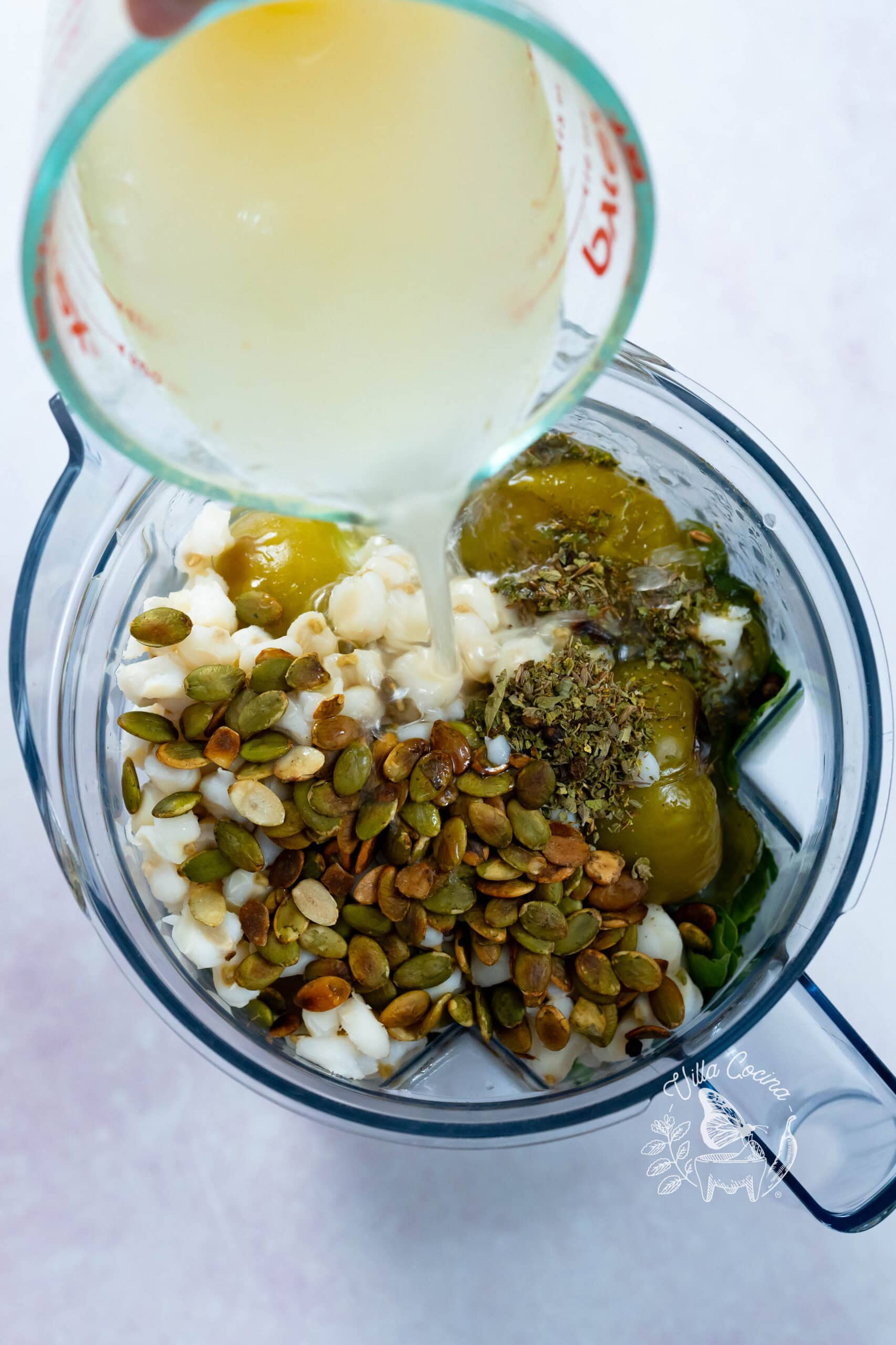
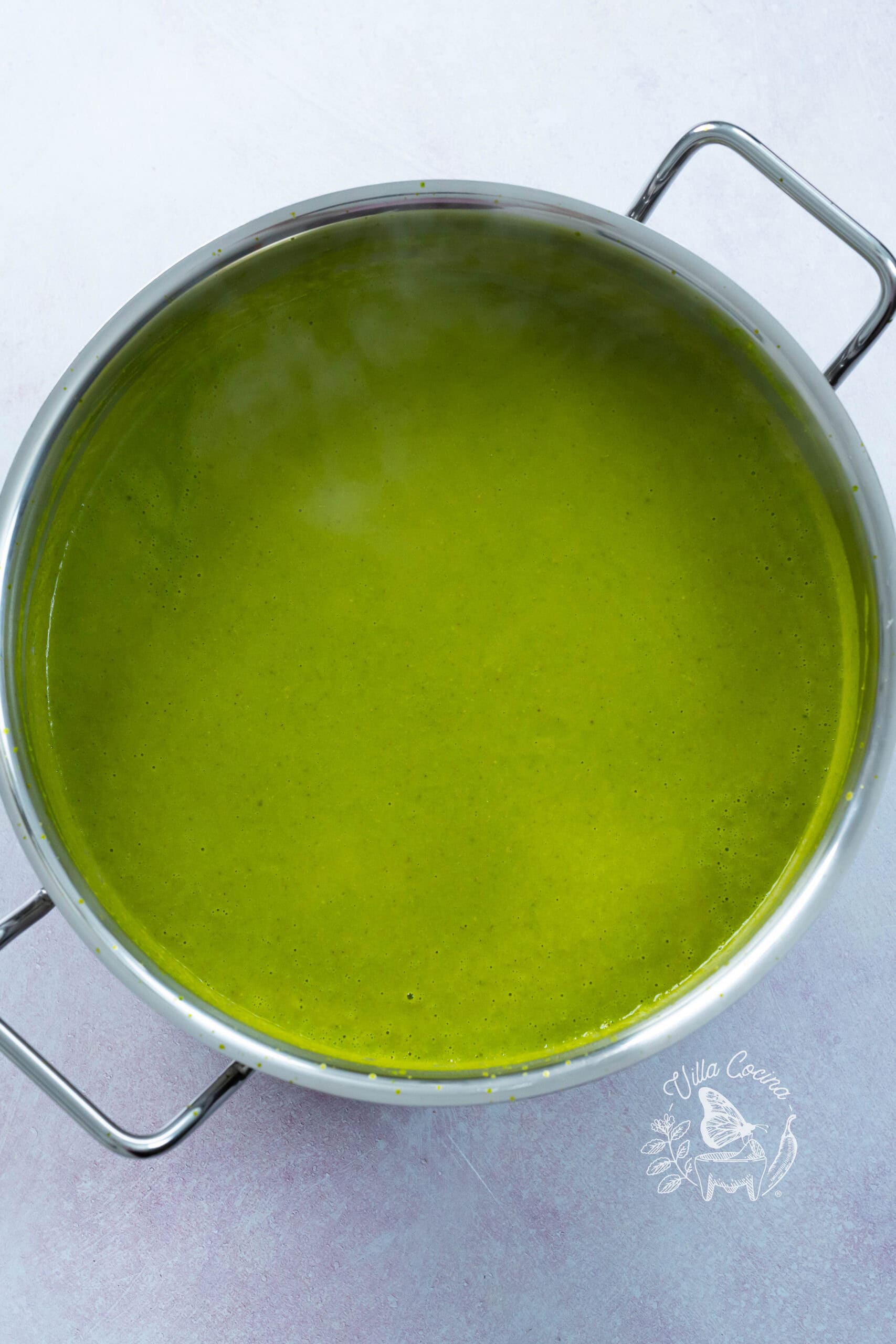
Toast the pumpkin seeds, then blend them with the roasted ingredients, herbs, spices, hominy, and broth until smooth. Simmer the sauce briefly with epazote to deepen the flavor.
Step 4: Build the Pozole
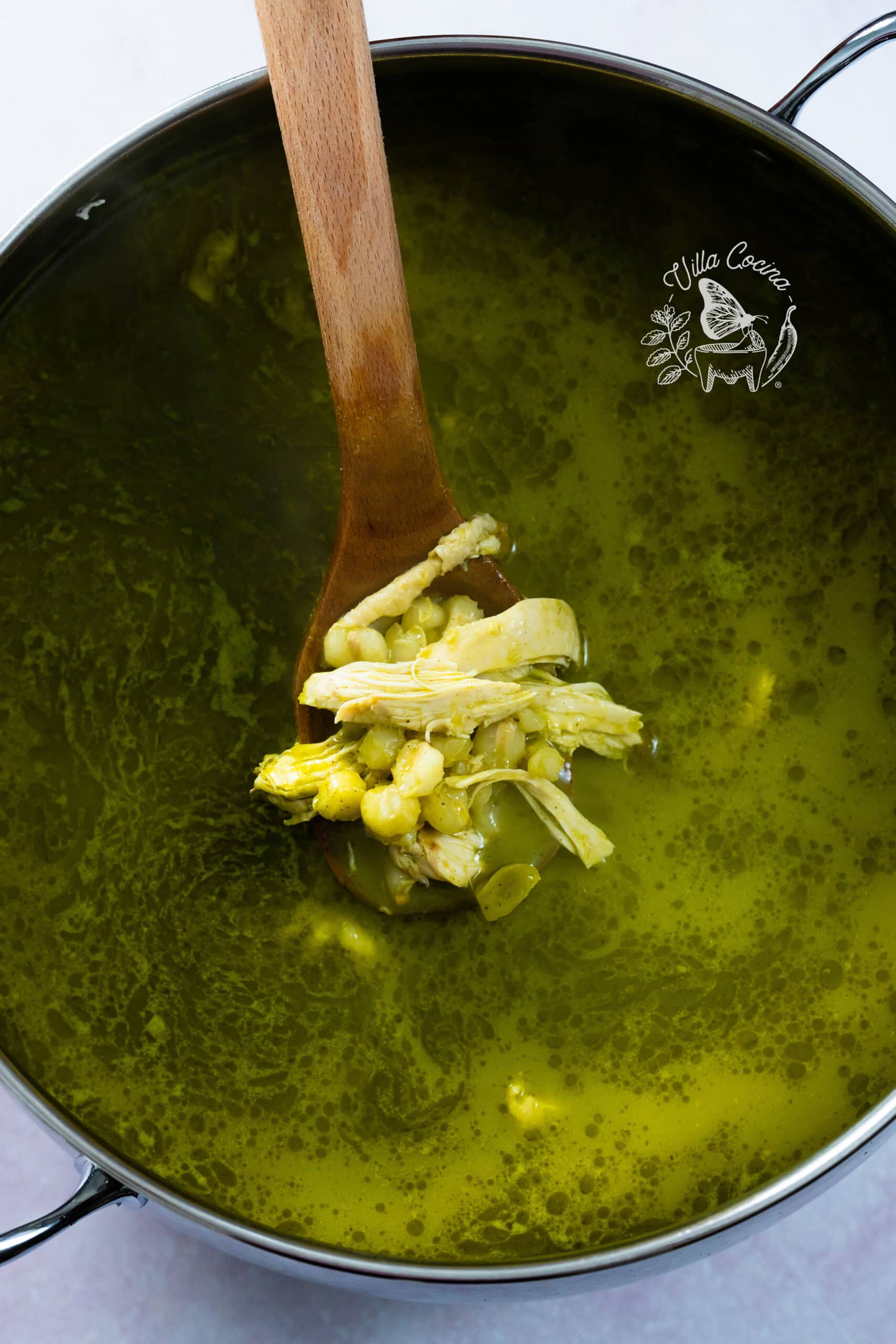
Stir the salsa verde into the broth and hominy, simmer to let the flavors come together, then add the shredded chicken and heat through. Season to taste.
Step 5: Serve and Garnish
Serve hot in large bowls and finish with classic toppings like onion, cabbage, radishes, oregano, lime, and avocado. Enjoy with tostadas on the side.
Recipe Video Tutorial
Watch my easy video tutorial for step-by-step visuals on making this Green Chicken Pozole.
Enjoyed the video? Subscribe and tap the bell for updates on new recipes. Thank you for your support!
Stovetop Tomatillos & Peppers (No Broiler)
- Roast the poblano and jalapeño peppers on a comal over medium-high heat, turning as needed, until charred and blistered on all sides.
- Transfer the roasted peppers to a bowl, cover with plastic wrap, and let them steam for 5 minutes. Then peel the poblanos, remove the stems, and scrape out the seeds from both the poblanos and jalapeños (use gloves if needed).
- In a saucepan, cover the tomatillos with water and bring to a boil over medium-high heat. Reduce the heat to medium-low and simmer gently until they soften and turn pale green. Remove them from the water and set aside.
Why You’ll Love This Recipe
- Weeknight-friendly: Chicken cooks faster than traditional versions, so you can enjoy pozole verde any day of the week.
- Nourishing and comforting: Packed with fiber-rich leafy greens, and herbs, this soup is deeply satisfying and wholesome.
- Homemade, flavorful broth: No store-bought broth needed—we build our own from scratch for richer, fresher flavor.
- Balanced in every way: Each bowl offers the right mix of savory broth, tender chicken, hearty hominy, and fresh toppings.
- Customizable: Adjust the heat, toppings, and garnishes to suit everyone at the table.
- Great for sharing: Perfect for gatherings, meal prep, or cozy family meals.
Pozole has to be one of my all-time favorite dishes, and honestly, cabbage is my favorite topping—along with avocado. You can even add a spoonful of salsa macha for an extra kick of heat.
During the holidays, warm drinks like café de olla make the perfect companion, as does something sweet like atole de elote, a corn-based atole. And if you’re in the mood for something refreshing, horchata pairs beautifully with this warm, comforting bowl.


My Personal Carb-Counting Approach
As someone who needs to count carbohydrates, dishes like this are easy to enjoy and adapt. When serving, I simply reduce the amount of hominy on my plate, and that works beautifully for me. Even though tostadas are a traditional side, I usually skip them, which helps me confidently keep my glucose levels in check while still enjoying every bowl.
You can read more about my diagnosis on My Diagnosis Article, or learn more about me on the About Me Page.
Store
Refrigerating
Let the pozole cool completely, then transfer it to an airtight container. Store in the refrigerator for up to 4 days.
Freezing
Portion the cooled pozole into freezer-safe containers, leaving a little space for expansion. Freeze for up to 3 months. Thaw overnight in the refrigerator before reheating.
Reheat: Reheat gently on the stovetop on a gentle simmer, stirring occasionally, or in the microwave until heated through.
Mexican Soups and Stews:
FAQs- Answered
What’s the difference between pozole verde, rojo, and blanco?
Pozole blanco has a clear broth, while pozole rojo is made with dried red chiles for a deeper, smoky flavor. Pozole verde gets its vibrant color and fresh taste from tomatillos, green chiles, herbs, and leafy greens.
Is canned hominy already cooked?
Yes, canned hominy is fully cooked. You simply need to drain and rinse it before adding it to the pot.
Is pozole verde spicy?
It depends on the peppers and the specific batch used. Poblano peppers and jalapeños are generally mild, especially when the seeds are removed. I remove the seeds to keep the heat balanced, knowing that spicier toppings can be added later to suit every palate.
Can I make pozole verde without epazote?
Yes. Epazote adds a traditional flavor, but the pozole will still be delicious if you simply omit it.
First published in December 2022, this recipe has been updated with new photos, helpful tips, and a few tweaks to enhance the overall experience.

Green Chicken Pozole
Ingredients
Cook the Chicken
- 1 (6 lb) whole chicken
- Liberally kosher salt
- 19 cups water, divided
- 1 head garlic, slice end off
- 1 white onion, halved
- 2 bay leaves
- 110 oz can hominy, rinsed, drained, divided
Salsa Verde
- 12 oz tomatillos, husked, rinsed
- 2 poblano peppers, halved, deseeded, stemmed
- 3 jalapeños, halved, deseeded, stemmed
- 3 tbsp pumpkin seeds
- 4 green onions, trimmed, roughly cut
- 2.5 oz spinach leaves
- 1.5 oz radish leaves, fresh
- ½ bunch cilantro, fresh
- 4 garlic cloves
- 4 whole cloves
- ½ tsp cumin seeds
- ½ tsp whole black peppercorns
- 2 tsp dried Mexican oregano
- 2 sprigs epazote leaves
Additional
- Avocado oil, as needed
- Kosher salt, as needed
Toppings
- Dried Mexican oregano
- White onion, diced
- Jalapeño or serrano pepper, finely diced
- Cabbage, shredded
- Radishes, sliced
- Lime juice
- Avocado, diced
- Tostadas
Instructions
Roast the Ingredients
- Preheat the oven to high broil. Line a sheet pan with parchment and arrange the tomatillos and peppers (skin-side up) in a single layer.
- Drizzle lightly with oil and broil on the third bottom rack from the top for 10–15 minutes, or until charred, blistered, and softened.
- Let them cool slightly, then peel the skins off the poblanos.
Spatchcock the Chicken
- Pat the chicken dry with paper towels. Place it breast-side down with the neck facing you, and use sturdy kitchen shears to cut along both sides of the backbone. Remove the backbone completely and set it aside.
- Still breast-side down, cut through the cartilage located between the breastbone. Flip the chicken over and press firmly on the breast until it lies completely flat. Season both sides generously with salt.
Cook the Chicken
- Heat 3 tbsp avocado oil in a large (13-qt) pot over medium-high heat. Lay the chicken breast-side down, along with the backbone, and sear until golden brown. Flip and brown the other side.
- Pour in 18 cups of water, then add the garlic, bay leaves, and onion. Set aside 1 cup of hominy for the salsa, and add the rest to the pot.
- Bring to a boil, then reduce to medium-low, cover, and gently simmer for about 30 minutes, or until the chicken is fully cooked.
- Transfer the chicken to a tray to cool. Remove and discard the garlic, onion, and bay leaves from the broth, then lower the heat to low and keep the pot covered.
- Once the chicken is cool enough to handle, shred it into thick pieces and discard the skin and bones.
Make the Salsa Verde
- Toast the pumpkin seeds in a pan over medium-low heat until fragrant and lightly browned; transfer to a dish.
- In a blender, combine the toasted pumpkin seeds, roasted tomatillos and peppers, 1 cup hominy, green onions, cilantro, radish leaves, spinach, garlic, cumin, black peppercorns, oregano, cloves, and 2 cups of broth (taken from the pot).
- Blend until completely smooth. The goal is not to strain—blend long enough so you don’t have to, but strain if needed.
- Heat 2 tbsp of oil in a medium pot over medium-low. Pour in the sauce carefully and stir. Add 1 cup of water to the blender, swirl, and add it to the pot to catch every bit of salsa.
- Bring to a gentle simmer over medium heat, then reduce to medium-low, add the epazote, and cook for 5 minutes.
- Turn off the heat and pour the salsa into the large pot with the broth and hominy. Stir to combine. Bring it back to a boil over medium-high heat, lower to medium-low, cover, and gently simmer for 10 minutes.
- Add the shredded chicken and simmer for another 10 minutes, covered, or until fully heated through. Season with salt to taste.
Serve
- Ladle the pozole into large bowls. Top with onion, serrano or jalapeño, shredded cabbage, radishes, and a pinch of Mexican oregano (rub it between your hands first). Finish with a squeeze of lime juice and optional diced avocado.
- Stir in the toppings and enjoy with tostadas on the side.
Nutrition
Did you make this recipe?
Show some love! Tag @villacocinaofficial on Instagram and drop a 5-star review. Your support means everything—thanks!